

Finding room for greenery in your home can feel like a constant battle against dry indoor air and dark rooms. Integrating terrariums as home decor: a modern guide offers a simple way to bring nature indoors. These self-contained glass gardens serve as elegant design pieces and require very little day-to-day care.
Data from agricultural extension offices indicates that improper watering kills more house plants than pests or low light. A sealed glass ecosystem solves this issue by creating its own self-regulating microclimate. By understanding how these miniature systems work, you can create a beautiful piece of living art.
Quick Answer
Terrariums as home decor act as self-contained indoor gardens. Closed glass systems recycle moisture for tropical foliage. Open glass containers let airflow dry desert succulents.
Keep your glass vessel in bright, indirect sunlight. Wipe the glass regularly to allow proper light entry.
The Decorator’s Dilemma: Finding the Balance Between Style and Plant Care
Modern interior design often places plants on dark shelves or in drafty corners. These spots look great but are often lethal to living greenery. A major challenge of indoor gardening is matching your aesthetic goals with the biological needs of your plants.
Glass containers help by shielding delicate leaves from air conditioners and dry winter air. However, you must still choose a spot that provides adequate lighting. Before buying any decorative vessels, it helps to understand what these setups require to stay healthy.
Balancing design and science ensures that your display remains vibrant. If you ignore the light and temperature needs of the plants, your investment will quickly dry up or rot.
The Science Under the Glass: How a Miniature Ecosystem Works
A closed glass container acts as a tiny greenhouse. The sun warms the interior, causing moisture to evaporate from the soil and escape from the leaves. This vapor condenses on the cool glass walls and trickles back down to the roots.
This natural cycle mimics the global water cycle on a tiny scale. Research from the University of Maryland Extension shows that closed environments maintain higher humidity than open rooms. This keeps moisture-loving species thriving without daily watering.
Because these systems are small, they are sensitive to sudden environmental shifts. Small changes in heat or moisture can disrupt the delicate balance. Learn more about how small ecosystems react to changes before you set up your vessel.
These glass structures also trap heat efficiently. This process is driven by the physical properties of the container. You can read about why these containers retain heat to help position your display away from direct heat sources.
Assessing Your Space: Lighting, Temperature, and Airflow Variables
Every room has its own microclimate. To keep your glass garden alive, you must evaluate the ambient conditions of your chosen spot. Light, ambient temperature, and drafts will dictate how your plants grow.
Indirect light is the safest option for almost all glass-enclosed plants. Direct sunlight acts like a magnifying glass and can scorch the foliage. If you want to use artificial lights, look into natural versus artificial setups to keep your plants healthy.
Window glass also alters the intensity of the light entering a room. Knowing how different types of glass affect light will guide your placement. Aim for a spot that receives plenty of bright, filtered light throughout the day.
The Core Decision: Closed vs. Open Glass Vessels
Your first design choice is deciding between a sealed vessel and an open container. This choice dictates the types of plants you can use and how often you must care for them. Choosing the wrong container for your plants will lead to rapid decay.
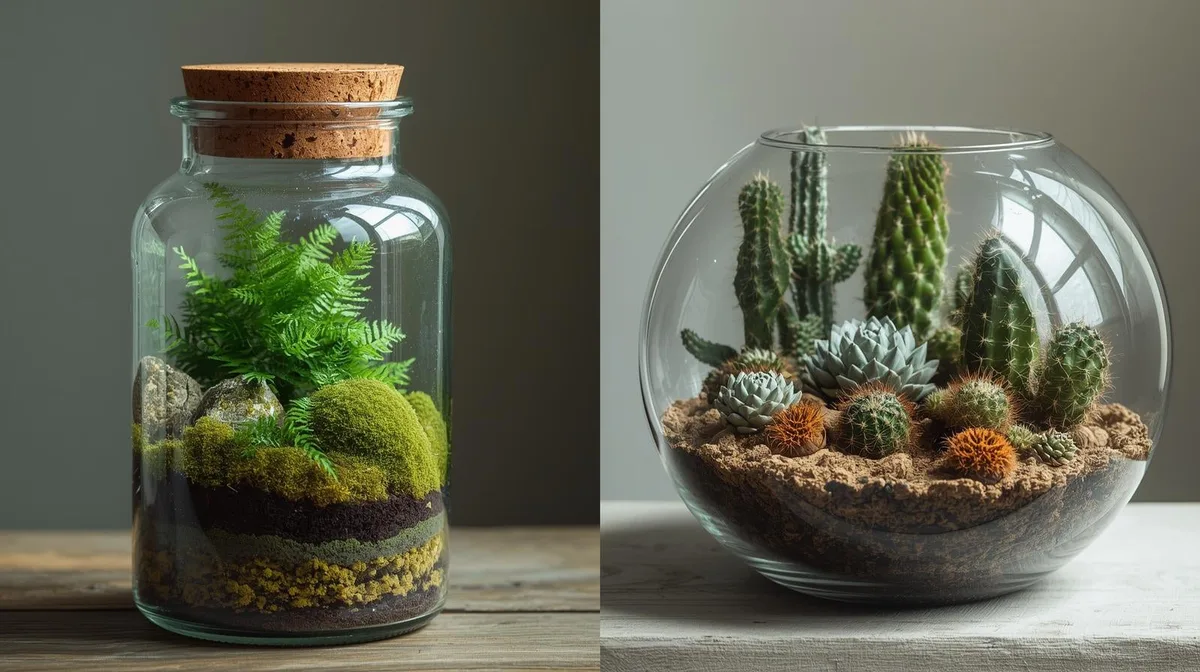
Closed systems trap moisture and are perfect for tropical ferns and mosses. Open vessels allow air to circulate freely, making them ideal for desert plants like cacti. You can review the various container styles to find the best match for your room.
Sealed environments require very little watering because they recycle their own moisture. Open designs behave more like traditional planters. Understanding the differences in care requirements will help you choose a setup that fits your daily routine.
| Feature | Closed Vessels | Open Vessels |
|---|---|---|
| Humidity | Very High (90%+) | Low (Ambient room air) |
| Watering | Once every 2-4 months | Once every 1-2 weeks |
| Best Plants | Ferns, Mosses, Nerve Plants | Cacti, Succulents, Air Plants |
Selecting Your Glass: Aesthetic and Functional Vessel Options
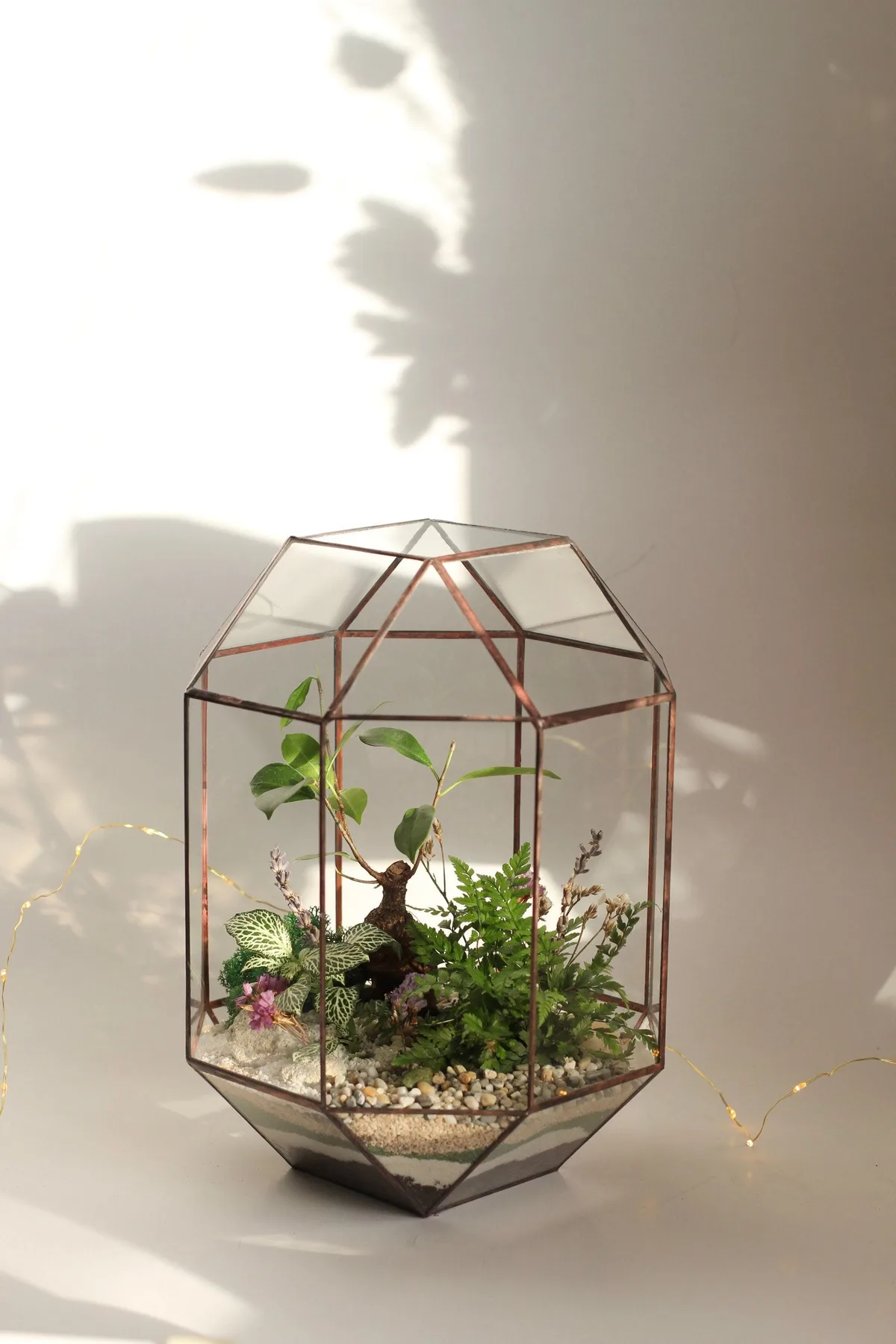
The design of your glass vessel sets the style for your room. Apothecary jars fit traditional and vintage spaces. Sleek geometric containers with black metal seams match modern and industrial decors.
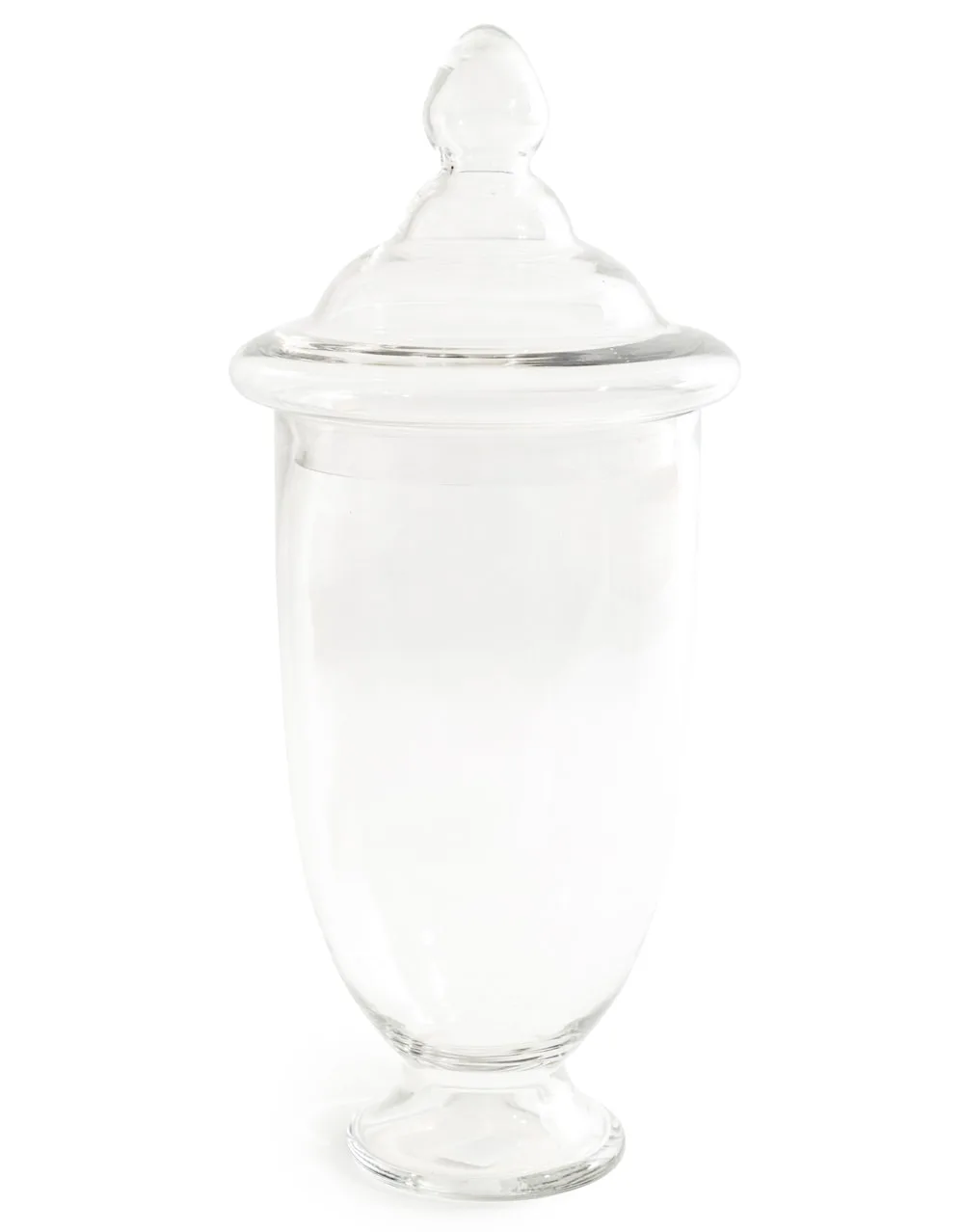
You will also need to choose between glass and plastic containers. Plastic is durable but scratches easily and can discolor over time. Read our guide on choosing between glass and plastic to find the right material for your budget.
According to historical records from the Royal Botanic Gardens, Kew, early glass cases paved the way for modern indoor plant cultivation. Today, high-clarity glass remains the best choice for both light transmission and aesthetic appeal.
Choosing the Right Plants: Matching Species to Your Terrarium Type
A successful display requires plants that share the exact same environmental needs. Grouping a moisture-loving fern with a dry-climate succulent will kill one of them. Take time to research the needs of each species before planting.
For closed jars, select miniature tropical plants that love damp environments. Creeping fig, pilea, and nerve plants are popular choices. You can explore how to select tropical species to build a stable community.
Avoid fast-growing plants that will quickly press against the glass walls. English ivy and common garden herbs will quickly outgrow a small jar. Learn about the specific plants to avoid before starting your project.
Material Selection: Substrates and the All-Important Layering Order
Because glass vessels do not have bottom drainage holes, your layering must manage excess water. If soil sits directly in standing water, the roots will rot. You must create a built-in drainage system using distinct layers.
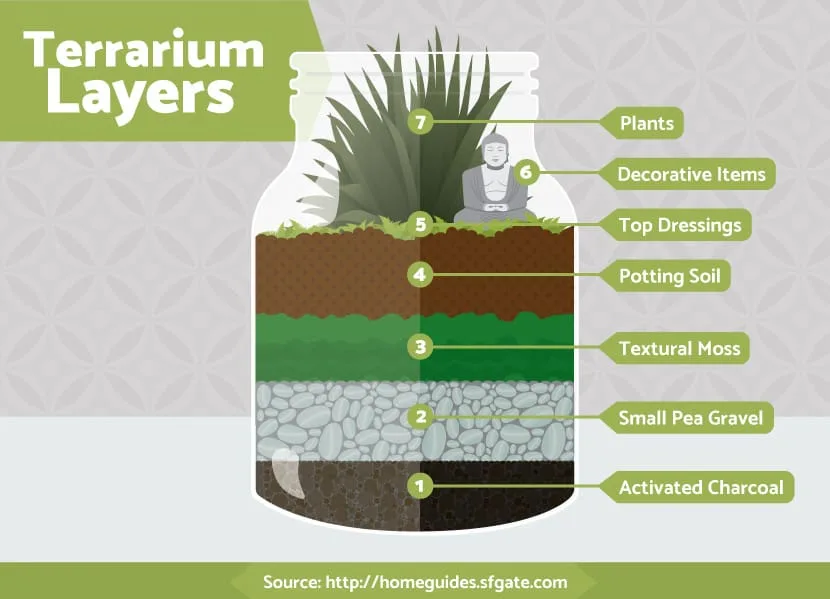
Start with a base layer of river rocks or pea gravel. On top of the stones, add a thin layer of activated charcoal to keep the water clean and absorb odors. Next, install a durable barrier layer to prevent the soil from washing down into the rocks.
Finally, add the growing medium. Do not use standard yard dirt, which is too dense and contains bugs. Instead, select a sterilized substrate blend that keeps roots aerated and allows water to drain freely.
Step-by-Step Assembly: Building Your Modern Terrarium Layer by Layer
Building your glass garden is a simple process if you follow the correct steps. Gather your tools, plants, and clean substrates before you begin. Working slowly prevents dirtying the inside glass and damaging delicate leaves.
Use these steps to assemble your layout:
- Clean the vessel: Wash the container thoroughly to remove any manufacturing dust or residues.
- Create the base: Pour one to two inches of gravel into the bottom of the container.
- Add filtering carbon: Sprinkle a thin layer of activated charcoal over the gravel.
- Lay the barrier: Cut a mesh screen to fit and place it flat over the charcoal.
- Spoon the soil: Add two to three inches of your potting mix, sloping it for design depth.
- Plant the foliage: Dig small pockets in the soil, place the roots, and press the soil down gently.
- Style the scene: Add decorative pebbles, small twigs, or moss to create a natural landscape.
Once assembled, use a spray bottle to lightly moisten the soil. Avoid pouring water directly into the vessel, which can wash away the substrate. Keep the container open for a day to allow moisture levels to stabilize.
Interior Styling Principles: Integrating Living Art Into Your Home Decor
A well-designed glass garden should look like a curated piece of art. Place your display alongside items with different textures, like ceramic bowls or linen books. This contrast makes your green display stand out.
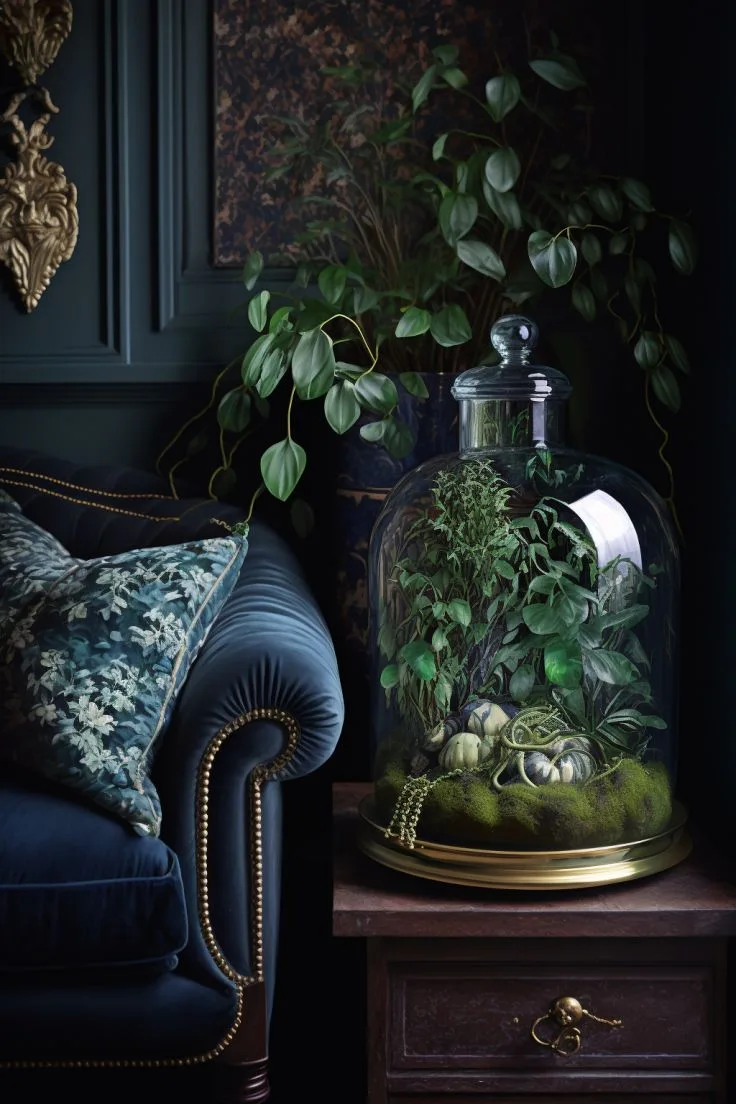
Vary the sizes and shapes of your vessels on display shelves. Place a tall cylinder jar next to smaller geometric containers to create depth. Grouping items in odd numbers is a reliable way to make a display look balanced.
Match the color of your decorative sand or gravel to your room’s color scheme. White stones create a clean, minimalist style. Dark basalt stones fit best in modern, industrial settings.
Common Pitfalls: How to Recognize and Prevent Ecosystem Collapse
Miniature ecosystems can change rapidly. If you see signs of decay early, you can adjust the environment and save the plants. Ignoring early warnings usually leads to complete loss of your display.
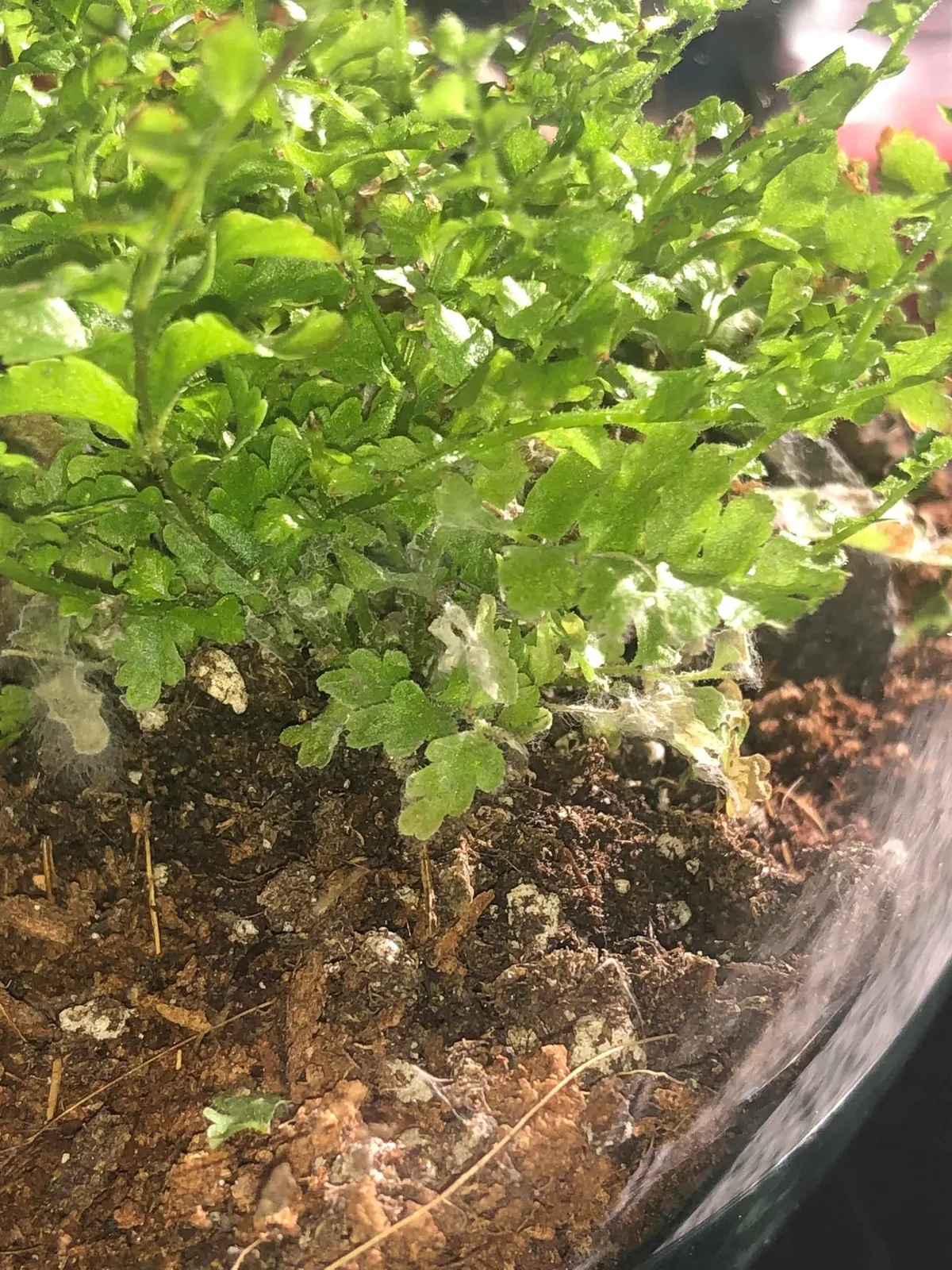
Excess moisture is the absolute most common issue. If heavy condensation blocks the view of your plants for days, the system is too wet. You must learn how to clear excess condensation to prevent root rot.
Fungal outbreaks can quickly ruin your plants. If you see fuzzy mold, use a cotton swab to dab it away and let the jar air out. Keeping the moisture levels balanced prevents these issues from starting.
Maintenance Workflow: Long-Term Care for a Thriving Display
While these systems are easy to care for, they are not completely maintenance-free. A quick monthly check will keep the glass clean and the plants healthy. Regular pruning prevents your plants from outgrowing the container.
Trimming overgrown leaves also keeps the glass clear. Make sure to use long-handled scissors to make clean cuts. Check out our routine care checklist to establish a simple maintenance schedule.
When you do need to add water, always use distilled water. Tap water contains minerals that leave white stains on the inside of the glass. Using the right water type will keep your display looking clean.
Frequently Asked Questions About Modern Terrarium Decor
How often do you need to water a closed terrarium?
As of 2026, most sealed glass setups only need water every two to four months. Check the soil visually through the glass. If the soil looks dry and no moisture forms in the morning, add a small amount of distilled water.
Do terrariums smell bad?
A healthy glass garden should smell like damp earth. If your setup smells sour or rotten, it indicates bacteria growth from too much water. Remove the lid for a few days to let the system dry out completely.
Can you use normal garden soil for your setup?
Do not use soil from your yard. Natural soil contains weed seeds, pest eggs, and mold spores that thrive in warm glass. Always use a clean, commercial potting mix made for indoor containers.
Where is the best place to put a terrarium in a house?
The best location is a room with bright, indirect sunlight. Place the container a few feet away from east-facing or west-facing windows. Keep the glass away from direct heat sources and heating vents.








