

What is a Terrarium? The Complete Guide is your starting point for understanding these self-contained miniature ecosystems. A terrarium is a sealed or open glass container where plants thrive in a controlled environment with minimal care.
As of 2026, they remain a popular way to bring greenery into small spaces.
The secret lies in the balance of light, moisture, and plant selection. With the right setup, a terrarium can stay lush for years with almost no watering.
Quick Answer
A terrarium is a glass container holding plants in a self-sustaining environment. Closed terrariums recycle moisture and need rare watering. Open terrariums suit dry-loving plants like succulents.
They work as decor, gifts, or educational tools.
Why Terrariums Are So Popular (And Who They’re Perfect For)
Terrariums solve a common problem: how to keep plants alive with minimal effort. They’re ideal for people with busy schedules, small living spaces, or a tendency to forget watering. The enclosed environment mimics a natural ecosystem, reducing the need for constant care.
They also appeal to crafters and plant enthusiasts. Teachers use them to demonstrate ecosystems, while parents enjoy them as a low-mess kids’ project. For urban dwellers, terrariums offer a touch of nature without the commitment of a full garden.
Closed vs. Open Terrariums: Which One’s Right for You?
Closed terrariums are fully sealed, creating a humid environment perfect for tropical plants like ferns and mosses. They recycle water through condensation, so you’ll rarely need to water them. However, they can develop mold or rot if overwatered or placed in direct sunlight.
Open terrariums have no lid, allowing air circulation. They’re better for plants that prefer dry conditions, such as succulents or air plants. These require more frequent watering but are less prone to fungal issues.
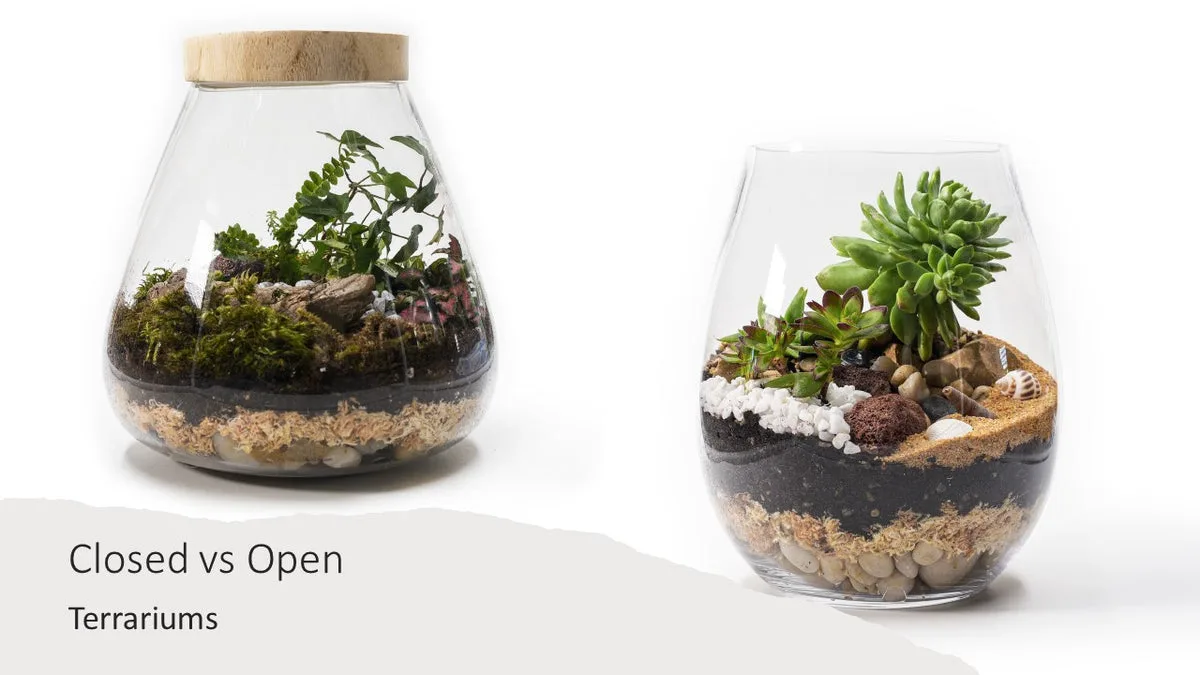
Which should you choose?
- Closed terrarium: Best for low-maintenance, humidity-loving plants.
- Open terrarium: Best for dry-climate plants or if you tend to overwater.
What Goes Inside a Terrarium? The Essential Layers
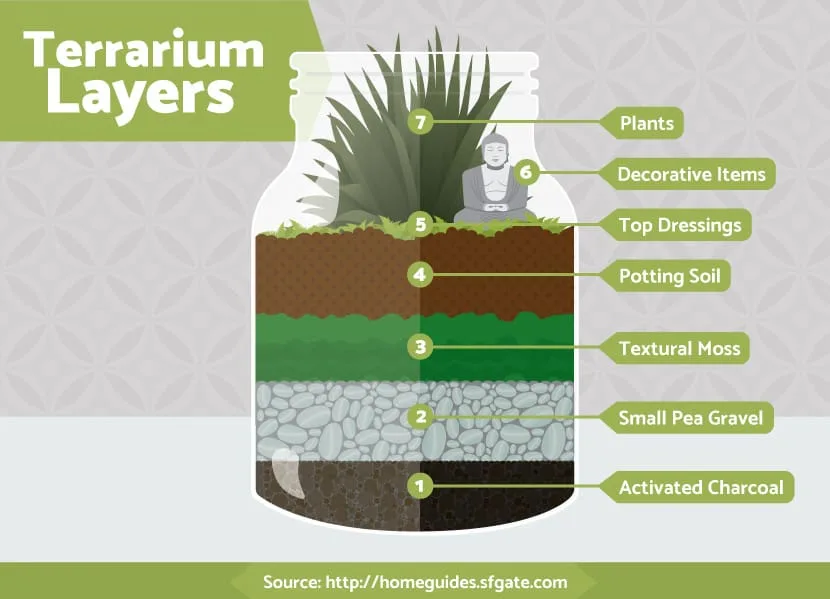
A terrarium isn’t just soil and plants. The right layers ensure drainage, prevent rot, and keep the ecosystem balanced.
- Drainage layer (1-2 inches): Pebbles or small stones to prevent waterlogging.
- Charcoal layer (1/4 inch): Activated charcoal keeps water fresh and prevents odors.
- Soil layer (2-3 inches): Use a well-draining potting mix suited to your plants.
- Plant layer: Choose slow-growing, compact plants that fit your terrarium type.
- Decorative layer (optional): Moss, sand, or small figurines for aesthetics.
Pro tip
Skip the charcoal if you’re using an open terrarium, as it’s less critical for drainage. For closed terrariums, it’s non-negotiable.
Best Plants for Terrariums (And Which to Avoid)
Not all plants thrive in a terrarium. The best choices are slow-growing, compact, and suited to the moisture levels of your setup.
Best plants for closed terrariums
- Ferns: Love humidity and indirect light.
- Fittonia (nerve plant): Colorful leaves, stays small.
- Mosses: Add texture and retain moisture.
- Peperomia: Compact and drought-tolerant.
- Pilea glauca (silver sparkle): Trailing habit, great for hanging terrariums.
Best plants for open terrariums
- Succulents: Need dry conditions and bright light.
- Air plants (Tillandsia): No soil required, just mist occasionally.
- Haworthia: Small, slow-growing, and low-maintenance.
- Echeveria: Rosette-shaped succulents for a desert look.
Plants to avoid
- Fast-growing plants (e.g., ivy, pothos) will outgrow the space.
- Plants needing direct sunlight (e.g., cacti in closed terrariums).
- Large or root-heavy plants that disrupt the layers.
Step-by-Step: How to Build Your First Terrarium
Start with a clean, dry glass container. Wash it with soapy water and rinse well to remove any residue that could harm plants.
Add the drainage layer first. Use small pebbles or gravel, about 1 to 2 inches deep. This prevents water from pooling at the roots.
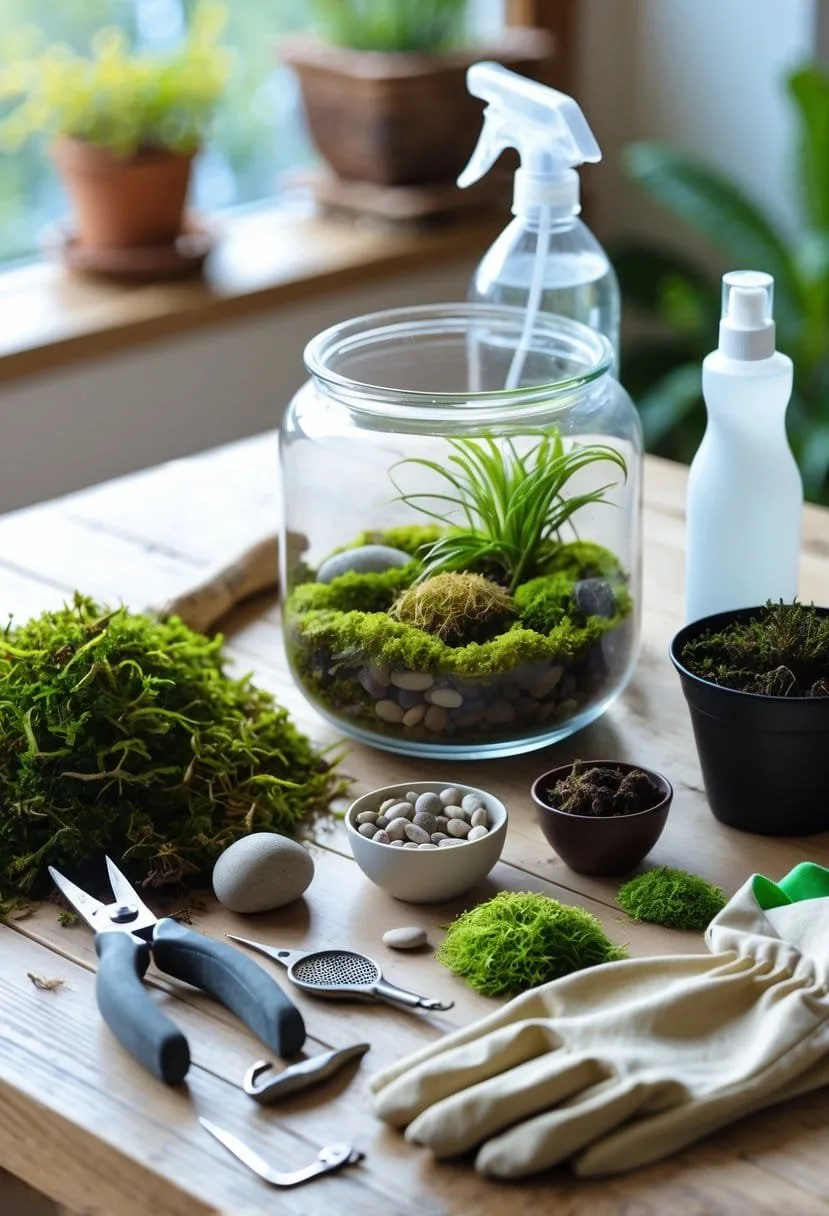
Next, add a thin layer of activated charcoal. A quarter inch is enough to filter water and prevent odors. Skip this for open terrariums if you prefer.
Top the charcoal with a layer of sphagnum moss. This keeps soil from mixing into the drainage layer while retaining moisture.
Add your potting soil, 2 to 3 inches deep. Use a mix suited to your plants. For tropical plants, a standard potting mix works.
For succulents, choose a sandy, fast-draining blend.
Plant your choices carefully. Dig small holes, place the roots gently, and pat the soil down. Leave space between plants so they have room to grow.
Finish with decorative touches. Add moss, small stones, or figurines to create your desired look. Mist lightly if the soil feels dry.
Common Terrarium Mistakes (And How to Fix Them)
Overwatering is the most common issue. Closed terrariums recycle moisture, so too much water leads to root rot and mold. If you see foggy glass constantly, remove the lid for a day to let it dry out.
Choosing the wrong plants causes problems too. Fast-growing plants will outgrow the space quickly. Stick to slow-growing, compact varieties.
Poor drainage is another frequent mistake. Without a proper pebble layer, water sits at the bottom and drowns the roots. If your plants are wilting or yellowing, check the drainage and repot if needed.
Direct sunlight can cook your terrarium. Glass magnifies heat, which can kill plants and crack the container. Move it to a spot with bright, indirect light instead.
Terrarium Care: Light, Water, and Long-Term Maintenance
Closed terrariums need bright, indirect light. A north or east-facing windowsill is ideal. Avoid direct sun, which can overheat the glass.
Watering depends on the type. Closed terrariums may never need watering if the cycle is balanced. Open terrariums need misting every 2 to 4 weeks, depending on humidity.
Prune plants as they grow. Trim back any overgrown leaves or stems to keep the terrarium looking neat. Use small, sharp scissors to avoid damaging the plants.
Clean the glass occasionally. Use a damp cloth to wipe away condensation or algae. Avoid harsh chemicals that could harm the plants.
Creative Terrarium Ideas for Different Styles
A tropical terrarium uses ferns, mosses, and fittonia. Add a small driftwood piece for a jungle feel. Keep it closed to maintain high humidity.
A desert terrarium features succulents and sand. Use an open container and place it in a sunny spot. Add decorative rocks for texture.
A woodland terrarium mimics a forest floor. Use moss, small ferns, and miniature mushrooms. Add a tiny figurine for a fairy garden effect.
A modern terrarium keeps it minimal. Use a geometric glass container with a single statement plant. Stick to neutral colors for a clean look.
Troubleshooting: Mold, Foggy Glass, and Dying Plants
Foggy glass means too much moisture. Remove the lid for a few hours to let excess water evaporate. If the problem persists, reduce watering.
Mold appears as white or black spots on soil or plants. This usually means poor air circulation or too much water. Remove affected plants and let the terrarium dry out.
Yellowing leaves often signal overwatering or poor drainage. Check the soil moisture and ensure the drainage layer is intact. Repot if necessary.
Brown, crispy leaves indicate underwatering or too much light. Mist the terrarium and move it to a shadier spot. Open terrariums may need more frequent watering.
Frequently Asked Questions
How often should I water a closed terrarium?
A well-balanced closed terrarium may never need watering. The sealed environment recycles moisture through condensation. Only add water if the soil looks dry and the glass isn’t foggy.
Can I use tap water for my terrarium?
Tap water is usually fine if it’s not heavily chlorinated. Let it sit out for 24 hours to allow chlorine to evaporate. For sensitive plants, use filtered or distilled water.
Why does my terrarium smell bad?
A foul odor typically means stagnant water or rotting plant matter. Remove the lid and let it dry out. Check for dead leaves or excess water in the drainage layer.
Can I put a terrarium in direct sunlight?
No. Direct sunlight can overheat the glass and cook the plants. Place it in bright, indirect light instead.
A north or east-facing window is ideal.
What’s the best container for a terrarium?
Any clear glass container with an opening wide enough for your hand works. Jars, bowls, and apothecary jars are popular choices. Avoid colored glass, which blocks light.








