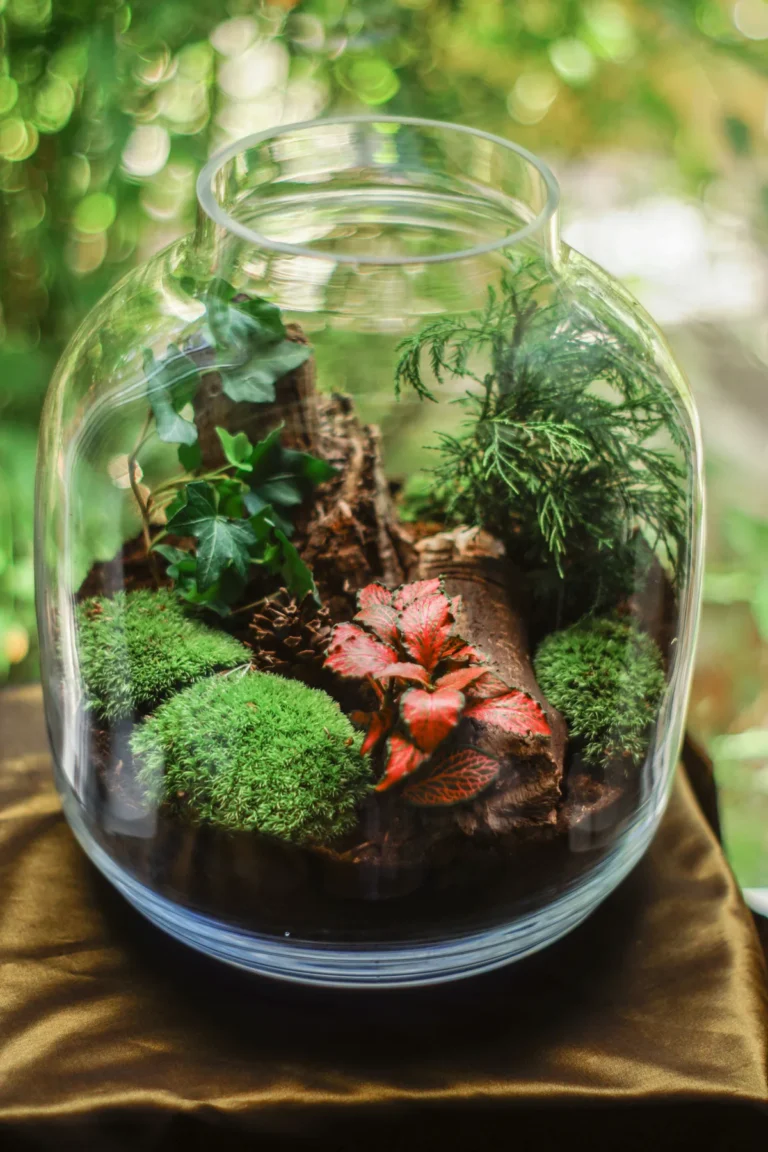
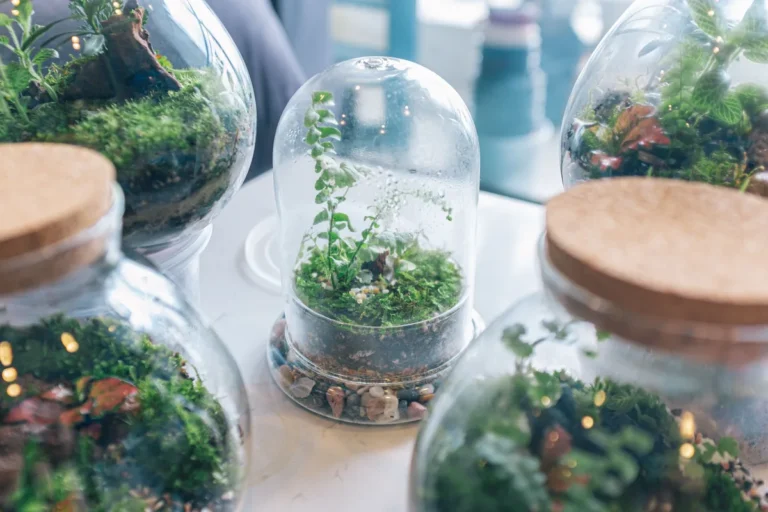
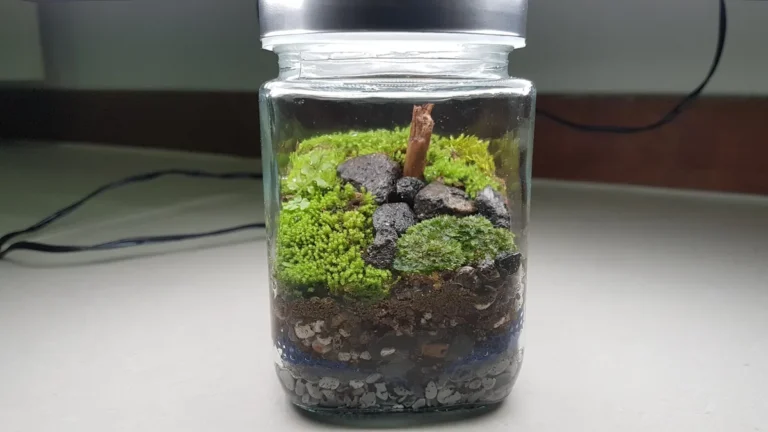
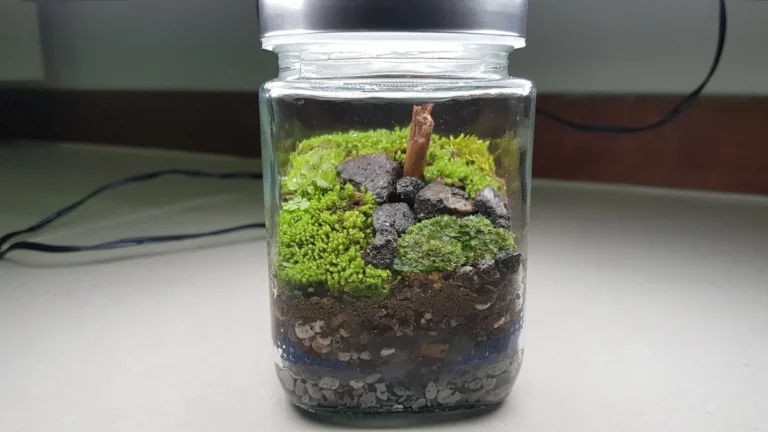
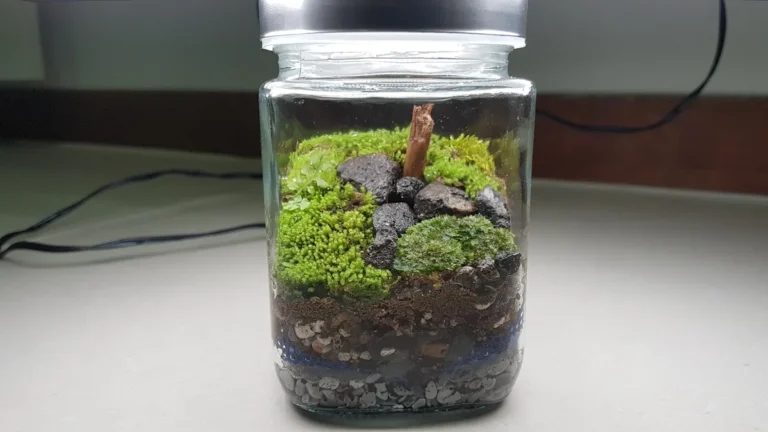
Where to place your terrarium jar so it never cooks (window distance & light guide) is the one question that saves your moss before it turns to straw. A sealed glass jar works like a tiny greenhouse. In direct sun, temperatures inside can climb 20 to 40°F above your room.
Pick the wrong spot, and everything in there slow-roasts within a week.
The fix is simpler than you’d think. Most closed terrariums thrive at 65 to 78°F in bright, indirect light, roughly 1,000 to 2,500 foot-candles. In our research, placement errors kill more first-month terrariums than overwatering does.
So let’s start with the jar itself, because it’s the real oven here.
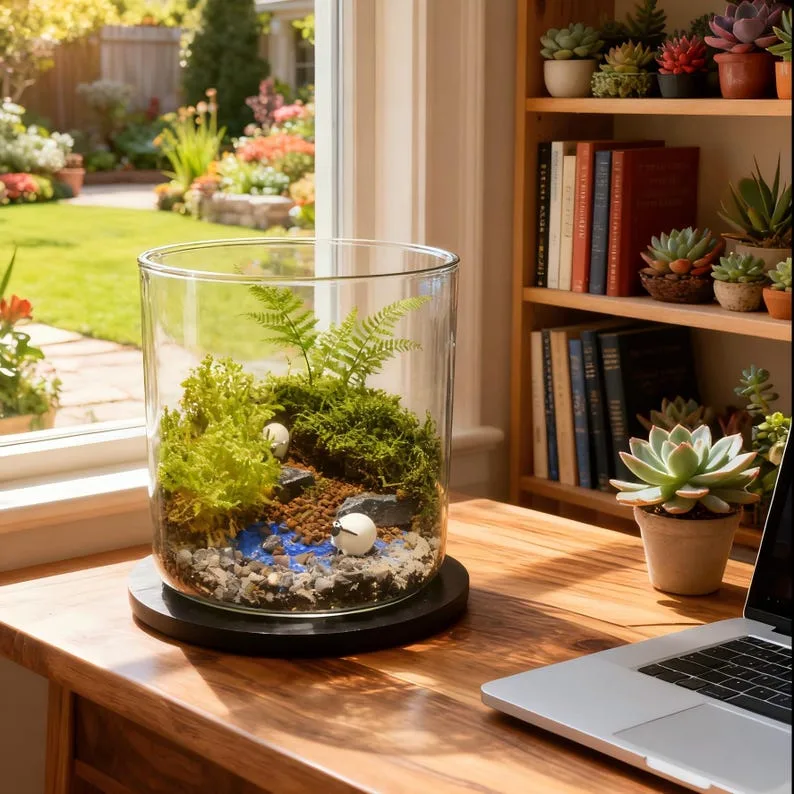
Why a Glass Jar in the Wrong Spot Becomes an Oven
Sunlight passes through glass as shortwave energy. It hits your plants, soil, and hardscape, then converts to heat. The same glass that let the light in won’t let all that heat back out.
That’s the greenhouse effect, and it doesn’t care that your greenhouse is a repurposed pickle jar.
Building scientists call this solar heat gain, and researchers at Lawrence Berkeley National Laboratory have spent decades measuring it in residential windows. Your jar runs the same physics in miniature. Sealed glass has no vent, no fan, and no escape route for trapped warmth.
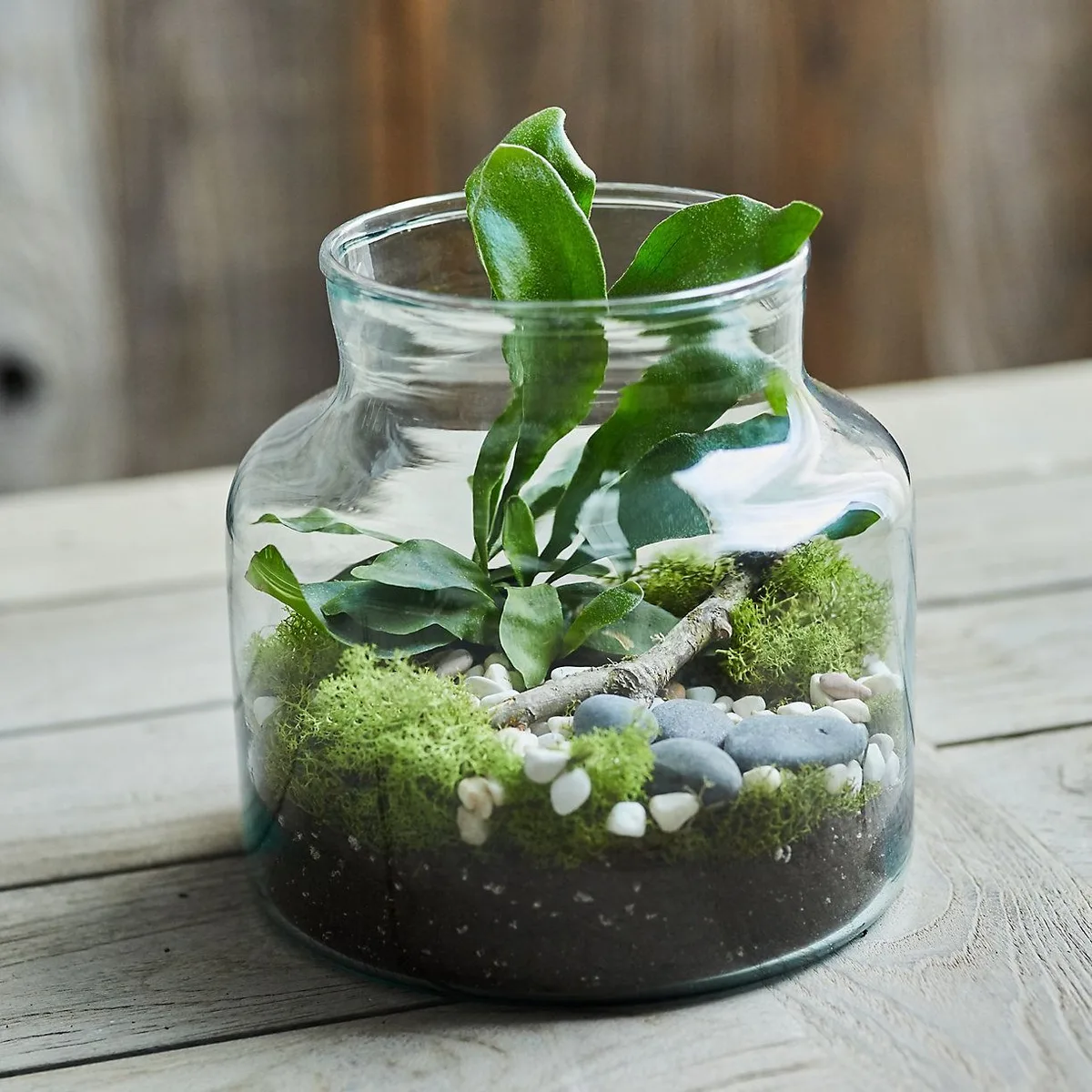
Now add moisture and close the lid. The water cycle inside goes into overdrive, with condensation streaming down the glass and the substrate staying soggy. Heat plus trapped humidity turns the jar into a pressure cooker.
For the full mechanics of that loop, our closed terrarium water cycle guide breaks it down step by step.
The damage shows up fast. Moss bleaches, yellows, and goes crispy at the tips, which is why yellowing moss usually traces back to light and heat. Fittonia and ferns wilt at midday, then collapse.
By the time the jar smells like steamed spinach, it’s already over.
The Quick Answer: Safe Window Distances at a Glance
Place your terrarium jar in bright, indirect light, never direct sun. East windows are the gentlest and safest. Sit the jar within 3 feet of east or north glass.
Pull it 5 feet or more from south or west glass. Keep the interior between 65 and 78°F.
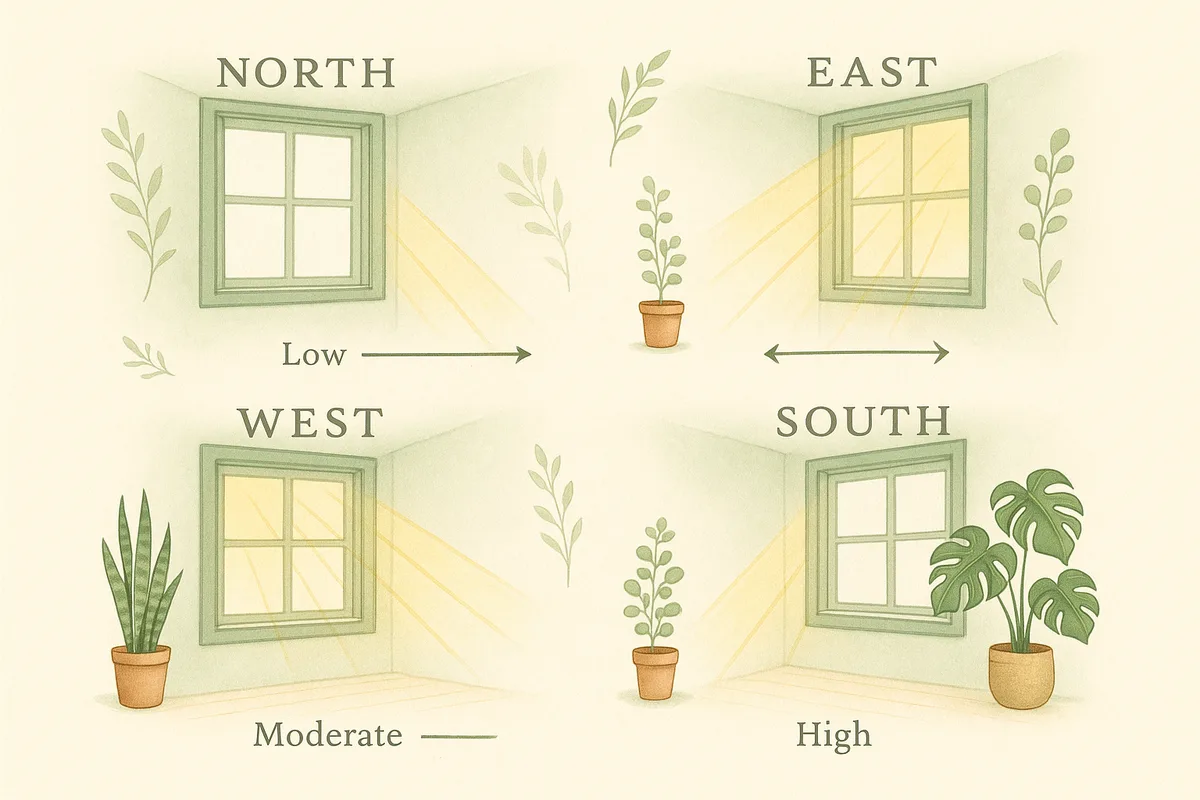
Here’s the cheat sheet for the Northern Hemisphere, where south-facing glass is the strongest:
| Window | Direct sun per day | Cook risk | Safe jar placement |
|---|---|---|---|
| North | None | Too dim, not too hot | Within 3 ft of the glass |
| East | 2 to 4 gentle morning hours | Low | On the sill to 3 ft from the glass |
| South | 6 or more harsh midday hours | High | 5 ft or more back, or behind a sheer |
| West | 3 to 6 hot afternoon hours | High | 5 ft or more back, or behind a sheer |
Southern Hemisphere readers, flip the north and south rows. East and west behave the same anywhere on the planet.
What “Bright Indirect Light” Actually Looks Like
“Bright indirect light” is the phrase every plant person throws around. In plain terms, it means plenty of light reaches the jar, but no direct sunbeam touches the glass. If actual sunlight lands on the plants for more than an hour or so, that’s direct light.
Sealed jars can’t handle it.
Numbers make it clearer. Foot-candles are the standard unit for light intensity. Midday direct sun measures 5,000 of them, often far more.
Bright, indirect light sits around 1,000 to 2,500, and that’s the band where most mosses, ferns, and fittonia thrive. It lines up with the light-level guidance university extension programs publish for houseplants, like the indoor plant resources at University of Minnesota Extension.
You don’t need a light meter to find it. At midday, hold your hand about a foot above the spot you’re considering. A sharp, dark-edged shadow means direct light.
A soft, fuzzy shadow means bright, indirect light. Barely any shadow at all means the jar will slowly starve.
One modern wrinkle is worth knowing. As of 2026, most new residential windows ship with low-E coatings for energy efficiency. Manufacturer specifications indicate these coatings often transmit only around 70 to 80 percent of visible light.
Older single-pane glass passes noticeably more, so the same spot behaves differently in an old house versus a new build.
Jar type matters here too. A closed jar is the heat-sensitive one, since it can’t shed excess warmth. Open jars handle much more light, and if you’re running mixed setups, our open vs. closed terrarium guide explains which plants want which.
Window Direction Cheat Sheet: North, South, East, West
Window direction is the single biggest variable in placement. The same jar that thrives beside an east window might starve beside a north one. Here’s how each direction behaves, Northern Hemisphere first.
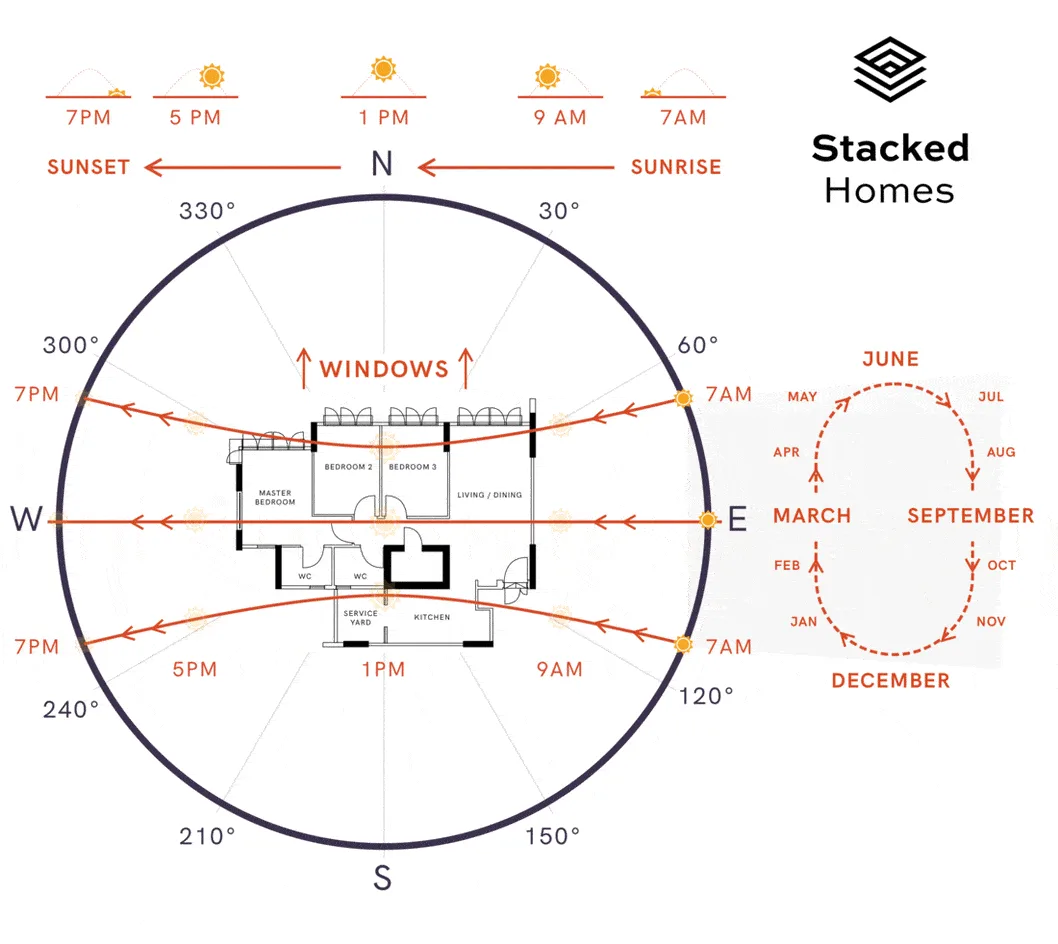
South-Facing Windows (Northern Hemisphere): The Biggest Cooking Risk
South windows pull the most intense, longest-lasting sun of any direction, often 6 or more hours with brutal midday peaks. In summer, light reaches deep into the room and the sill itself heats up like a griddle. A sealed jar here is cooking on two burners: direct sun above and a hot surface below.
If south is your only option, keep the jar at least 5 feet back. Add a sheer curtain if sunbeams still find the glass. Skip the sill entirely.
North-Facing Windows: Usually Too Dim
North windows get almost no direct sun. That makes them safe but dim for closed jars. The real risk isn’t cooking.
It’s light starvation.
The fix is distance in reverse. Push the jar within 3 feet of the glass, sometimes right against it. Moss grows sparse and ferns go pale when parked too far from north light.
If growth still stalls, a small grow light solves it, covered later in this guide.
East-Facing Windows: The Morning-Light Sweet Spot
East windows catch 2 to 4 hours of gentle morning sun. The sun is low, the air is cool, and the light arrives soft and diffused. It’s the closest thing to jungle canopy light a window can offer.
Most closed terrariums live happily right beside east glass, even on the sill if it stays cool to the touch.
Watch midsummer, though, when even morning sun arrives stronger. If ferns still struggle in good east light, humidity mismatch is usually the real issue, and our fern guide walks through that fix.
West-Facing Windows: The Afternoon Danger Zone
West windows take the day’s hottest light. Afternoon sun combines full intensity with peak air temperature, so heat stacks on heat. Even a couple of hours of late-day sun can push a sealed jar past 90°F.
Treat west glass exactly like south glass. Keep 5 feet of distance or hang a sheer curtain. Morning light through a west window is harmless, so one afternoon check tells you everything.
If the air near the jar feels hot at 3 p.m., move it.
Living in the Southern Hemisphere? Flip Everything
If you’re in Australia, New Zealand, South Africa, or most of South America, the sun tracks through the northern sky. Every north and south rule above reverses. North-facing glass becomes your cooking risk.
South-facing glass becomes the gentle, dim option.
| Northern Hemisphere rule | Southern Hemisphere equivalent |
|---|---|
| South window is the harshest | North window is the harshest |
| North window is the dimmest | South window is the dimmest |
| East window, gentle morning sun | Same, no change |
| West window, hot afternoon sun | Same, no change |
East and west behave the same in both hemispheres, since the sun rises in the east everywhere on Earth. Seasons flip too. Your December is a Northern Hemisphere June, so plan summer heat protection around the holidays.
Latitude matters as well. The closer you live to the equator, the harsher your overhead sun and the more distance your jars need. A jar that’s happy 3 feet from a window in Melbourne might need 6 feet in Cairns or Singapore.
The Distance Rule: How Fast Light Drops as You Move Away From a Window
Distance is your throttle. Light doesn’t fade gently as you back away from a window. It falls off a cliff.
Near bright glass, intensity can drop by half within the first few feet.
Here’s how that translates into foot-candles:
| Spot | Approx. light level | Terrarium verdict |
|---|---|---|
| In a direct sunbeam | 4,000+ fc | Cooking zone, never |
| 1 to 3 ft from the glass | 1,000 to 2,500 fc | Sweet spot |
| 4 to 6 ft back | 500 to 1,000 fc | Workable, watch closely |
| 8 or more ft away | Under 300 fc | Too dim for most jars |
Two quirks matter in practice. First, stepping sideways cuts light faster than stepping straight back, because window light spreads mostly forward. If you need to dodge a sunbeam, retreat before you slide.
Second, the falloff is steep near the glass and flat deep in the room. One foot matters hugely up close and barely at all across the room. Troubleshoot in 1-foot increments, because big jumps overshoot in both directions.
What’s Between Your Jar and the Sky: Glass, Curtains, and Obstructions
The world outside your window trims light before it ever reaches the jar. Trees, the neighbor’s wall, a balcony overhead: every obstruction counts. Rule each one out before you trust a spot.
Trees are the sneaky one. A window that floods with sun in February can sit in heavy shade by July once the canopy leafs out. That’s why a spring check isn’t enough.
Give bright spots a midsummer recheck too.
What you hang inside matters just as much:
- Sheer curtain: the best cheap fix there is. It turns harsh direct sun into soft, diffused light, and a spot 2 to 3 feet from hot south or west glass becomes survivable overnight.
- Tilted blinds: they cut total light, but the stripes that slip through are still full-intensity beams. Fine for brightness, useless against heat.
- Frosted or textured glass: built-in diffusion. Lovely light, but it doesn’t block heat, so distance rules still apply.
Walls count too. Light-colored paint bounces window light deep into the room and rescues dim corners. Dark colors swallow it.
A mirror opposite the window throws real usable light into spots that would otherwise sit too dark. That one trick can rescue a north-facing room.
Read the Signals: Condensation, Moss Color, and Plant Stress Cues
Your jar tells you when a spot is wrong. You just have to read it at the right time of day.
The healthy condensation cycle looks like this: light fog in the morning, mostly clear glass by mid-afternoon, fog returning after dark. That’s the water cycle breathing with the day. It means temperatures are staying in range.
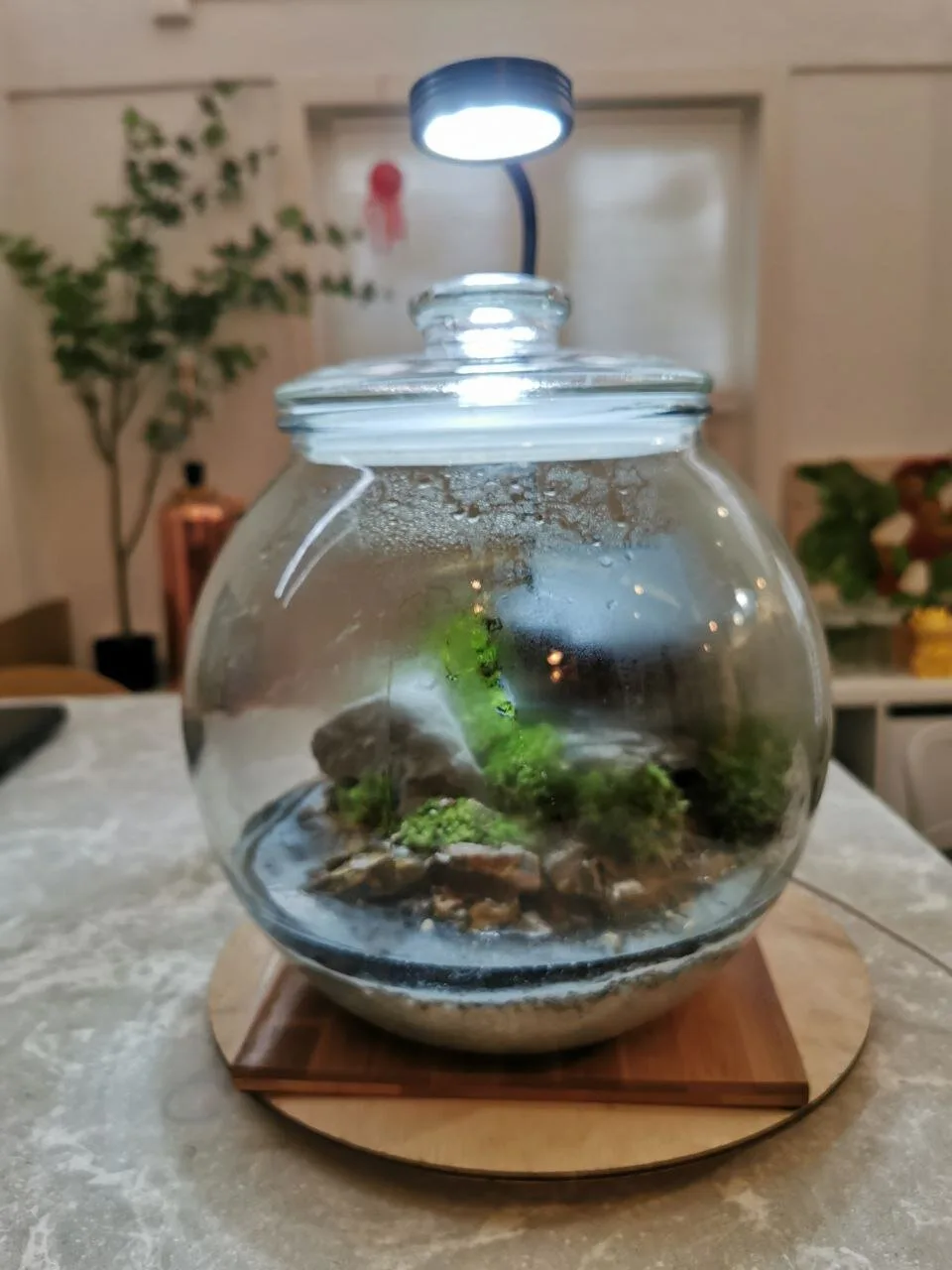
Red flags to watch for:
- Streaming walls and a dripping lid at 3 p.m. on a warm day. The jar is running hot, too wet, or both.
- Zero condensation ever in a sealed jar. That usually means the spot is too cool and dim.
- A green algae film creeping across the glass. Algae blooms on excess light, so shade the jar rather than just wiping it away.
For a deeper read on droplet patterns, our terrarium glass guide breaks down fog, drips, and pooling.
Moss color is the second gauge:
| Moss color | Meaning | Action |
|---|---|---|
| Deep, saturated green | Light is right | Hold position |
| Pale or bleached tips | Too much light or heat | Step back 1 to 2 ft |
| Brown, dry, crispy | Cooked | Move now, then triage |
Time your checks for midday on a bright day, since morning and evening readings run too gentle to be honest. If moss has already browned, check the brown moss revive-or-restart guide before tossing anything.
Fittonia gives the loudest early warning. Its leaves collapse when internal heat climbs, then perk back up at dusk. Once is a fluke.
Twice in a week means move the jar.
The 5-Day Placement Test: Step-by-Step Workflow
Don’t guess your spot. Test it for five days, because that covers a range of sun angles and room temperatures.
Day 1: set the baseline. Place the jar at the candidate spot in the morning. If you have a cheap thermometer or hygrometer, set it inside and aim for a peak reading under 80°F.
Days 1 and 2: check midday condensation between 1 and 3 p.m. Fog clearing by late afternoon means hold position. Streaming walls at 3 p.m. mean move back 2 feet and restart the clock.
If fog comes with puddled water, you’ve likely overfilled too, and the foggy glass and puddled water fix sorts that out.
Day 3: read the plants. Green moss and perky leaves mean stay. Bleaching, crispiness, or a midday wilt means step back a foot or hang a sheer.
Days 4 and 5: confirm. A steady fog cycle, green moss, and no new algae mean the spot is proven. Stop moving the jar, because constant shuffling stresses plants more than a slightly imperfect spot.
One rule throughout: change one variable at a time. Distance or curtain, never both. Otherwise you’ll never know which fix worked.
Seasonal Shifts: When and Why to Move Your Jar
The sun doesn’t hold still, so your jar shouldn’t either. Summer sun rides high and stays near the glass. Winter sun slides low and beams deep into rooms that stayed shaded all summer.
That winter angle is the one everyone forgets. In December, a bright window’s beam reaches several feet deeper into the room than it does in June. A jar that sat safely off to the side can suddenly land in a direct beam.
Give your brightest windows a five-minute noon check when the seasons turn.
Winter adds hazards beyond light:
- Vents and radiators blast hot, dry air straight at the jar.
- Sills above radiators run warmer than the rest of the room.
- Glass chills at night, so a jar hugging it cycles through heat and cold.
Summer asks for the opposite: pull the jar back a foot or two and favor gentle morning positions. Run a full placement check twice a year, around the spring and fall equinoxes, when sun angles shift hardest.
Last piece: quarter-turn the jar weekly. Plants lean hard toward their light source, and rotation keeps growth even. Do it consistently and your moss holds its color year-round, the way our all-year moss color guide lays out.
No Good Window? Grow Lights and Smart Workarounds
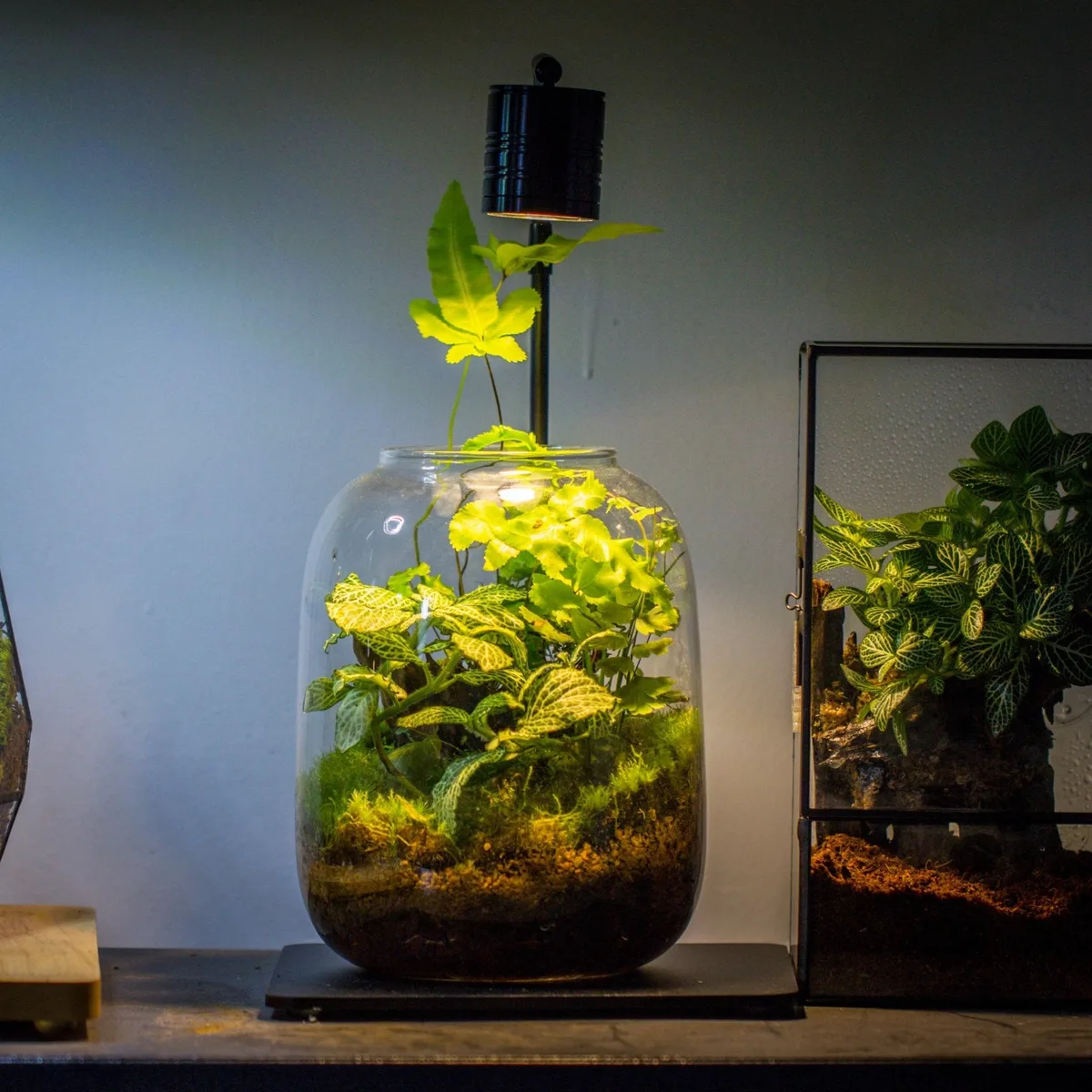
Some rooms simply have no workable glass. North studios, windowless offices, and deep-shade apartments all fail the hand-shadow test. A small full-spectrum LED grow light fixes that.
Mount it 6 to 12 inches above the jar and run it on an 8-hour timer. LEDs run cool, so the cooking risk nearly vanishes. Do a weekly condensation check, because a fixed timer changes the jar’s daily rhythm.
Placement Mistakes That Cook Terrariums
Most terrarium deaths trace back to a handful of placement errors. Dodge these five:
- Sitting on a south or west sill. Direct sun through sealed glass kills fastest.
- Ignoring the sill’s own heat. A hot surface cooks roots from below.
- Parking beside a radiator or vent. Dry heat bakes the jar all winter.
- Crystals or decorative glass inside. They can focus sunbeams into scorch spots.
- Skipping the seasonal recheck. Winter beams reach spots summer never touches.
Already seeing damage? Our five-minute terrarium check tells you what’s still salvageable.
Quick Decision Guide: Find Your Spot in 60 Seconds
Work down this list and take the first match:
- East window available? Within 3 feet of the glass. Done.
- Only south or west glass? Pull 5 feet back or hang a sheer. Verify at 3 p.m.
- Only north glass? Hug the window, within 3 feet. Add a grow light if growth stalls.
- No usable window at all? Full-spectrum LED on an 8-hour timer.
- Still torn? Run the 5-day test and let the jar vote.
Frequently Asked Questions
Can I keep a closed terrarium on a windowsill?
Only a cool east sill, and only if direct midday sun never touches the glass. South and west sills are almost always too hot. Touch the sill at 2 p.m.
If it feels warm, move the jar back a few feet.
How far from a window is too far?
Past about 8 feet, most rooms drop under 300 foot-candles and moss growth stalls. Pale, sparse moss with bone-dry glass means light starvation, not thirst. Pull the jar closer in 1-foot steps until color returns.
Does window glass type change placement rules?
It does. Low-E coatings often transmit just 70 to 80 percent of visible light, so the same spot reads dimmer in a new build. Older single-pane glass punches harder, so give jars extra distance there.
What internal temperature is dangerous?
Sustained temps above 85°F stress most terrarium plants, and sealed jars in direct sun can pass 100°F. Keep the interior between 65 and 78°F. A cheap thermometer inside the jar takes the guesswork out completely.